Motorcycle accidents often result in devastating injuries because riders lack the physical protection afforded to occupants of passenger vehicles. Without seatbelts, airbags, or a steel frame, motorcyclists are exposed to the full force of impact in a crash.
Crash victims face extensive medical treatment and long-term emotional and financial suffering. If you suffered an injury in a motorcycle accident, you have the right to seek compensation for your losses.
Even so, you must face insurers who may downplay your losses, delay, or reject your valid claim. You should, therefore, work with a legal professional to protect your rights following a motorcycle crash.
The experienced motorcycle accident attorneys at Emroch & Kilduff can provide legal support after the crash. We know how to challenge insurer tactics, build strong claims, and fight aggressively for your rights.
Motorcycle Accidents: Key Takeaways
- Motorcycle accidents frequently cause severe injuries such as traumatic brain injuries, spinal cord damage, fractures, road rash, and internal organ injuries due to riders' lack of protection.
- After a motorbike accident, seek immediate medical care, file a police report, and consult a motorcycle accident attorney.
- Compensation depends on injury severity, evidence strength, recovery time, insurance coverage, and legal representation.
- The duration of motorcycle accident lawsuits depends on injuries, liability disputes, and insurer cooperation.
- Call a motorcycle accident attorney to pursue compensation for your injuries.
Most Common Motorcycle Accident Injuries
Motorcycle accidents often result in severe, life-altering injuries due to the exposed nature of riders. Here are the common injuries in motorcycle collisions:
Traumatic Brain Injuries
Head trauma remains the leading cause of motorcycle fatality. Even with helmets, riders can suffer concussions, skull fractures, and brain hemorrhaging when their heads strike pavement or vehicles during crashes.
The sudden deceleration forces the brain to collide against the skull's interior, causing bruising, bleeding, and permanent cognitive damage.
Spinal Cord Injuries
The violent forces of motorcycle collisions frequently damage the vertebrae and spinal cord. When riders are thrown from their bikes or crushed between vehicles, the spine can fracture or dislocate.
These injuries often result in partial or complete paralysis, affecting limbs and bodily functions below the injury site.
Road Rash and Severe Lacerations
High-speed impacts with asphalt cause devastating friction burns that strip away skin layers. Road rash can expose muscle, tendons, and bone in severe cases, often requiring skin grafts and extensive reconstruction.
Flying debris and vehicle components can also cause deep lacerations that sever nerves and blood vessels.
Multiple Fractures
The force of collision commonly breaks multiple bones simultaneously. Arms and legs can be fractured when riders instinctively brace for impact or become trapped beneath motorcycles. Compound fractures, where bones pierce through skin, create infection risks and require surgical intervention with pins, plates, and rods.
Internal Organ Damage
Blunt force trauma from impacts ruptures internal organs. The liver, spleen, kidneys, and lungs are particularly vulnerable when riders collide with vehicles or crash into barriers. Internal bleeding from these injuries can be fatal without immediate surgical intervention.
Severe Burns
Motorcycle fuel tank ruptures during crashes can ignite, engulfing riders in flames. Contact with hot engine components also causes third-degree burns. These injuries destroy skin layers and damage underlying tissues. Recovery from severe burns involves prolonged hospitalization for wound care and skin grafting.
Limb Amputation
Crushing forces or severe mangling of extremities sometimes necessitate amputation. When legs become trapped under motorcycles or between colliding vehicles, the resulting tissue damage, bone fragmentation, and vascular destruction may be irreparable.
Facial Trauma
Unprotected faces suffer devastating injuries when striking helmets' interiors, windshields, or pavement. Jaw fractures, orbital bone breaks, dental damage, and facial disfigurement commonly occur, requiring reconstructive surgery and causing permanent scarring.
What to Do After a Motorbike Accident
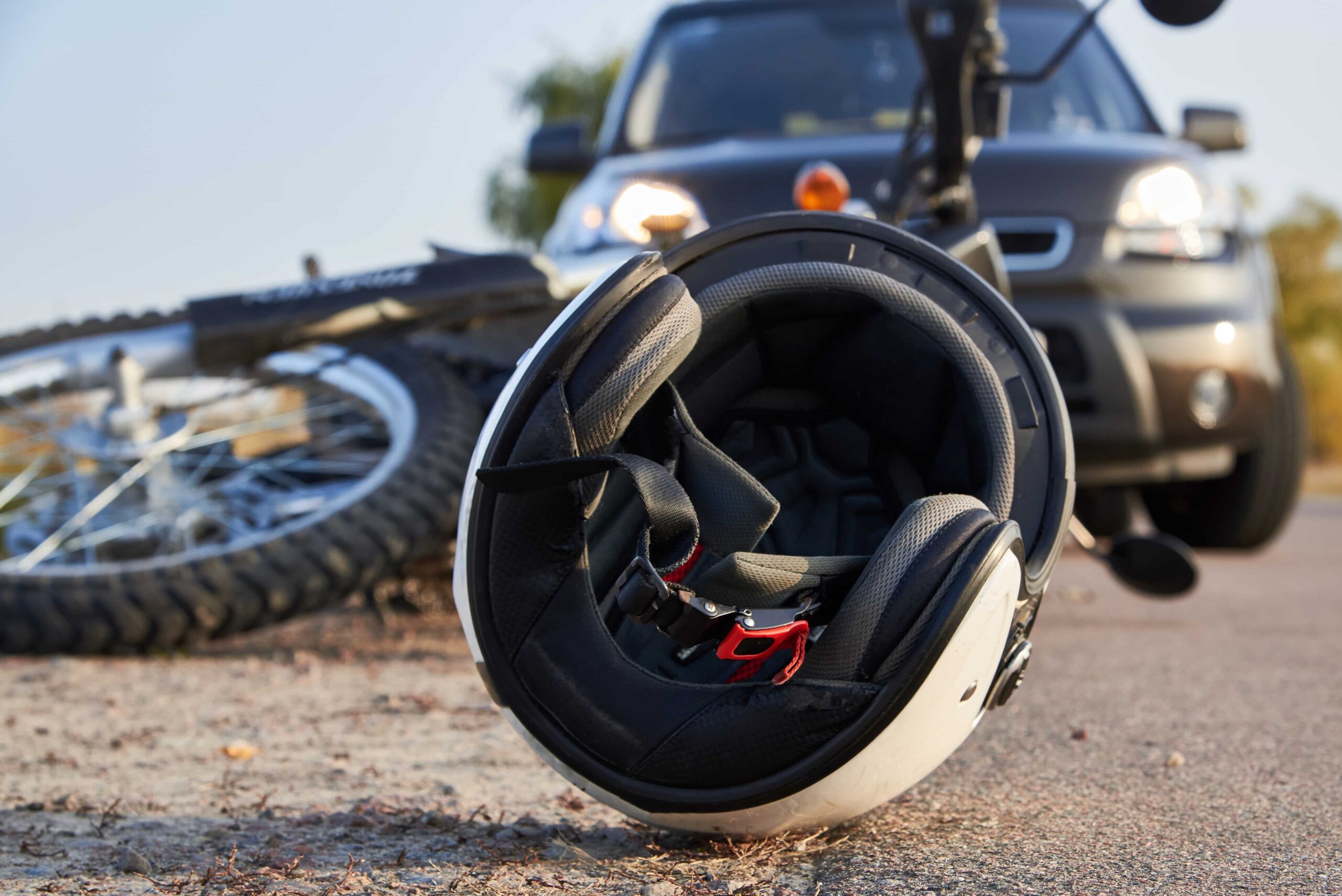
A motorcycle accident can be overwhelming and traumatic, often leaving riders unsure of what steps to take next. Knowing what to do immediately after a crash can protect your health, preserve evidence, and strengthen any future injury claim.
Here's what you should do after the crash:
Seek Immediate Medical Attention
Your health and safety should always be the top priority after a motorcycle accident. Even if you believe your injuries are minor, seek medical care as soon as possible. Motorcycle crashes frequently cause serious injuries that may not be immediately apparent, such as internal bleeding, concussions, spinal injuries, or soft tissue damage.
Prompt medical attention serves several important purposes:
- It ensures potentially life-threatening injuries are identified and treated early.
- It creates medical records that clearly link your injuries to the accident.
- It prevents insurance companies from arguing that your injuries were unrelated or exaggerated.
Skipping appointments or delaying care can not only harm your recovery but also weaken your injury claim by creating gaps in your medical documentation. A motorcycle accident attorney can use medical records to prove the severity of your injury and to support your compensation claim.
File a Police Crash Report
You should also notify the local police department after sustaining an injury in a motorbike accident. A responding law enforcement officer will document the scene, collect statements, and prepare an official crash report.
A motorcycle accident attorney can use the police crash report to establish fault and to support your compensation claim. Insurance companies also rely on the police crash report to verify the injury claim.
A police report typically includes details such as the date, time, and location of the accident, the names of the involved parties, witness information, and any citations issued. A motorcycle accident lawyer can help you file the crash report.
Consult a Motorcycle Accident Attorney

You should also speak to a legal professional after sustaining an injury in a motorcycle accident. Injured riders frequently face unfair bias from insurance companies, which may attempt to shift blame or downplay the severity of injuries.
Consulting an experienced motorcycle accident attorney early in the process can protect your rights and level the playing field.
A motorcycle accident lawyer can help by:
- Investigating the accident and preserving evidence.
- Identifying all potentially liable parties.
- Calculating the value of your damages, including future medical needs.
- Handling communications and negotiations with insurance companies.
- Preparing your case for trial if a fair settlement cannot be reached.
Attempting to handle a motorcycle injury claim on your own can work against you, particularly while you are recovering from serious injuries. A motorcycle accident lawyer can help you meet legal deadlines, so you don't lose your legal right to compensation.
How Much Can You Sue for a Motorcycle Accident
The value of a motorcycle accident lawsuit depends on multiple factors unique to each case. Because motorcycle crashes often cause severe, long-term injuries, compensation amounts can vary.
Here are the factors that influence how much you can sue for a motorcycle accident injury:
Severity of Injury
The severity of your injuries can determine whether you'll receive a higher or a lower settlement value. More serious injuries generally result in higher compensation because they involve greater medical costs, longer recovery periods, and substantial intangible losses.
Catastrophic injuries such as spinal cord damage, amputations, or permanent disabilities often justify higher settlements or verdicts than minor fractures or cuts. Severe injuries may also impact your ability to work or participate in daily activities, leading to increased compensation for lost earning capacity and reduced quality of life.
Availability of Evidence
Evidence is the foundation of all legal claims, including motorcycle accident lawsuits. Strong evidence directly impacts the value of your motorcycle accident claim. The more clearly you can prove fault, causation, and damages, the stronger your negotiating position becomes.
A motorcycle accident lawyer can enhance the value of your lawsuit using the following sources of evidence:
- Police crash reports
- Photographs or videos of the accident scene
- Traffic or surveillance camera footage
- Eyewitness statements
- Medical records and diagnostic imaging
- Expert testimony from accident reconstruction specialists
- Motorcycle damage and vehicle inspection reports
- Cell phone or electronic data showing distracted driving
Well-documented claims are more difficult for insurance companies to dispute, often leading to higher settlement offers.
Duration of Recovery Period
The length of your recovery also affects the value of a motorcycle accident lawsuit. Injuries requiring extended treatment, rehabilitation, or permanent accommodations typically warrant higher compensation.
For example, a broken wrist may heal within eight to twelve weeks, allowing a rider to return to work relatively quickly. In contrast, a spinal cord injury may require months or years of medical care, physical therapy, and lifelong adjustments.
Longer recovery periods result in higher settlement values and court awards, largely due to the substantial medical expenses, lost income, and other intangible losses.
Insurance Coverage of the Negligent Party
The insurer of the negligent party is primarily the source of compensation for the injured victim. Therefore, the negligent party's insurance coverage can limit or expand the amount you can realistically recover.
If the at-fault driver carries high policy limits, more compensation may be available to cover your losses. A motorcycle accident attorney can explore alternative sources of compensation if coverage is limited.
Legal Representation
Working with an experienced legal professional can enhance the value of a motorcycle accident lawsuit. A skilled motorcycle accident lawyer can enhance your claim in several ways, including:
- Conducting a thorough investigation of the accident
- Preserving and presenting compelling evidence
- Accurately calculating current and future damages
- Countering insurance company bias against motorcyclists
- Negotiating aggressively for fair settlements
- Taking the case to trial when necessary
With knowledgeable legal guidance, injured riders are better positioned to recover fair and just compensation for their injuries and long-term losses.
How Long Does a Motorcycle Accident Lawsuit Take?
The timeline for resolving a motorcycle accident lawsuit can vary.
Simple cases with clear liability and cooperative insurance companies may settle sooner. However, cases involving severe injuries, disputed fault, or uncooperative parties often take longer. Cases that proceed to trial generally take the longest to resolve.
Here are the factors likely to influence the timeline of your lawsuit:
- Severity of Injuries: Cases cannot settle until you reach maximum medical improvement. Catastrophic injuries requiring ongoing surgeries, rehabilitation, and long-term care experience delays, as attorneys must document the full extent of damages before negotiating settlements.
- Liability Disputes: When fault is contested, an extensive investigation becomes necessary. The involvement of accident reconstruction experts, witness depositions, and evidence gathering prolongs the process, especially in multi-vehicle crashes or cases involving road defects.
- Insurance Company Cooperation: Insurers who promptly acknowledge liability and make reasonable settlement offers accelerate the process. However, companies that dispute claims, delay responses, or make lowball offers force lengthy negotiations or litigation.
- Court Scheduling and Caseload: If litigation becomes necessary, overcrowded court dockets can delay hearings, depositions, and trial dates by many months, particularly in busy jurisdictions with limited judicial resources.
Do Not Face the Aftermath of a Motorcycle Accident Alone

You may experience financial distress after sustaining an injury in a motorcycle crash. For example, a broken limb can keep you out of work for months, leading to loss of income. You must also prove how the actions of the negligent party contributed to your losses.
Our motorcycle accident attorneys at Emroch & Kilduff have achieved millions of settlements on behalf of injured victims. You can, therefore, count on us to pursue compensation that'll support your recovery.
Contact us for a free case evaluation.
Motorcycle Accidents: Frequently Asked Questions
Who Is at Fault in Most Motorcycle Accidents?
Most motorcycle accidents result from the negligence of other drivers, particularly failure to yield the right of way, improper lane changes, and left-turn violations. However, fault determination requires examining the specific circumstances of each accident, including rider behavior and road conditions.
Can I Sue for an Injury?
Yes, you can sue for motorcycle accident injuries when facing uninsured motorists or insurance disputes over liability or compensation amounts. You can also initiate a lawsuit when another party's reckless driving, negligence, or intentional misconduct caused your damages.
Should I Get a Lawyer for a Motorcycle Accident?
Yes. A motorcycle accident lawyer helps you make informed decisions and protects your legal rights. They can also handle insurance tactics, preserve evidence, and ensure your actions after the crash do not jeopardize your ability to recover full compensation.
Does Virginia require a helmet for all motorcycle riders?
Virginia requires all motorcycle operators and passengers to wear a helmet while riding. The state also requires protective eyewear. Your choice to not wear a helmet, however, does not absolve an at-fault party for their negligence in injuring you.
How long do I have to file a motorcycle accident lawsuit?
Injured parties must file a personal injury lawsuit within the statutory period, known as the statute of limitations. In Virginia, this period is generally two years from the date of the accident. Failing to meet this deadline means you forfeit your right to pursue compensation.
Can a motorcycle passenger sue for injuries?
Yes. A passenger on a motorcycle can pursue a claim for injuries against the negligent driver of the other vehicle, against the operator of the motorcycle they rode on, or both. The unique facts of the accident determine who bears fault.