You may have a premises liability claim if an unsafe property condition caused your fall. A Virginia slip and fall attorney at Emroch & Kilduff can investigate what caused the fall, identify the responsible parties, preserve evidence, and pursue payment for the harm you sustained.
A fall on unsafe property can leave you with fractures, head trauma, spinal injuries, or months of lost income. Call (804) 531-4610 for a free case review to learn whether the facts support a claim.
- A Virginia Slip and Fall Attorney Can Determine Whether the Property Owner Was Negligent
- Property Owners May Be Responsible for Hazards They Created or Failed to Address
- The “Open and Obvious Condition” Rule Requires a Careful Investigation
- Evidence Should Be Preserved Before the Property Changes
- Medical Documentation Is Equally Important
- More Than One Party May Control the Property
- Claims Against Government Entities Have Special Notice Rules
- Virginia Usually Allows Two Years to File a Personal Injury Lawsuit
- How Emroch & Kilduff Builds a Slip and Fall Claim
- The Virginia Slip and Fall Injury Attorneys With Emroch & Kilduff Are Ready to Provide a Free Case Review
- Frequently Asked Questions About Virginia Slip and Fall Claims
A Virginia Slip and Fall Attorney Can Determine Whether the Property Owner Was Negligent

A successful claim usually requires proof that the person or business responsible for the property failed to use reasonable care. The condition that caused the fall, why it existed, and what the responsible party knew are central questions.
In most cases, Virginia premises liability law mandates a property owner or occupier to keep areas used by invited visitors reasonably safe. The responsible party may also have to warn visitors about a dangerous condition that was known or should have been discovered through reasonable attention.
The Reason for Your Presence on the Property is Key
The duty may depend on why you were on the property. An attorney can examine your status (as an invitee, licensee, or trespasser), the area where the fall occurred, and the party that controlled the property.
A claim does not arise merely because someone fell. The evidence must connect an unsafe condition and a failure of reasonable care to the injury. Call (804) 531-4610 for a free case review before records disappear or the scene changes.
Property Owners May Be Responsible for Hazards They Created or Failed to Address
A property owner may be liable when its employees created the danger or when the owner had sufficient notice of a condition caused by someone else. Evidence showing how the hazard developed often determines whether the claim can move forward.
When another customer creates the condition, the investigation may focus on how long it existed and whether a reasonable inspection would have found it.
Notice can take different forms. Actual notice means the responsible party knew about the hazard, such as when an employee received a complaint or saw the condition. Constructive notice may exist when a hazard remains present long enough that a reasonable inspection would have revealed it.
Evidence to prove the defendant’s negligence may include:
- Surveillance video may show when the hazard first appeared, how long it remained, and whether employees passed it without taking corrective action.
- Inspection and cleaning records can reveal whether required safety checks occurred and whether staff followed established procedures.
- Prior complaints or incident reports may prove that management already knew about the dangerous condition.
- Photographs can preserve the hazard’s size, location, lighting, and surrounding area.
- Employee schedules and assigned duties identify who was responsible for inspections or cleanup.
- Repair requests, maintenance records, and work orders can document unresolved problems.
- Witness accounts can describe conditions before and after the fall.
A Virginia slip and fall lawyer can send preservation demands before the video is overwritten. They can also seek records that you very likely would not be able to obtain on your own.
The “Open and Obvious Condition” Rule Requires a Careful Investigation
A property owner may argue that the condition was visible and should have been avoided. Whether that argument succeeds depends on the full setting, not simply on whether the hazard could be seen in a photograph taken later.
Lighting, shadows, crowds, displays, and the direction of travel can affect how noticeable a condition is. A defect may also appear minor from one angle but become difficult to detect while a person is walking normally through the area.
The scene should be documented promptly and from your perspective. Measurements, wide-angle photographs, close images, video, and a review of the surrounding layout may show why the danger was not reasonably apparent at the time. Do not assume that an insurer’s description of the condition ends the claim. Speak with a slip and fall injury lawyer Virginia residents trust with Emroch & Kilduff for a fact-specific review.
Evidence Should Be Preserved Before the Property Changes
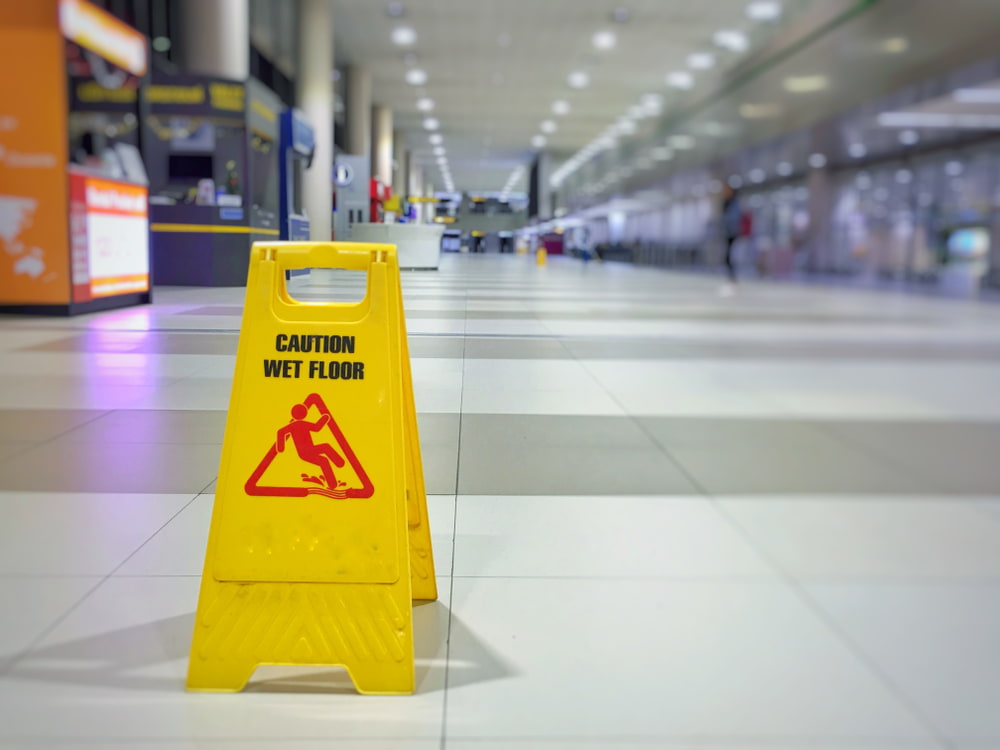
Slip and fall evidence can disappear within days. Spills are cleaned, ice melts, mats are moved, flooring is repaired, and surveillance systems may automatically overwrite recordings.
Report the incident promptly and ask for a copy, but do not guess about facts you did not observe. Identify witnesses and save the shoes and clothing you wore without cleaning or altering them.
Medical Documentation Is Equally Important
Tell your providers how the fall occurred and describe every affected body part. Follow your doctor’s recommended treatment plan and explain any new or worsening symptoms. Gaps in care can make it harder to connect the injury to the event or measure its effect.
Emroch & Kilduff can coordinate the liability and medical evidence, communicate with insurers, and identify missing records. Call (804) 531-4610 for a free case review before signing a statement or accepting a settlement.
Slip and Fall Injuries Can Require Long-Term Care
A fall can cause much more than temporary soreness. The force of impact can produce potentially catastrophic injuries that affect mobility, concentration, sleep, work, and independence. Claims may involve broken wrists, hips, ankles, or shoulders; torn ligaments; herniated discs; nerve damage; concussions; traumatic brain injuries; and aggravation of prior conditions.
A claim may seek compensation for:
- Emergency care, surgery, rehabilitation, and follow-up treatment.
- Reasonably anticipated future medical care.
- Lost wages and reduced future earning ability.
- Physical pain and emotional suffering.
- Scarring, impairment, and loss of normal activities.
- Necessary household assistance or mobility equipment.
The value of a case depends on the proof, not on a standard formula. A premises liability lawyer Virginia clients retain can work with medical providers, employers, vocational professionals, or other qualified witnesses when future losses require detailed support.
More Than One Party May Control the Property
The party whose name appears on the deed is not always the only potential defendant. Responsibility may rest with a tenant, store operator, property manager, maintenance company, cleaning contractor, snow removal service, or another party with control over the dangerous area.
Contracts and leases can reveal who is responsible for inspecting, cleaning, repairing, or maintaining a location. The practical facts also matter. A party may have exercised day-to-day control even when another entity owned the building.
An early investigation helps identify every responsible party before deadlines expire. Use our online form to schedule a free case review and let Emroch & Kilduff examine the ownership, maintenance, and contractual records.
Claims Against Government Entities Have Special Notice Rules
A fall involving government property may require written notice well before the ordinary filing deadline. Missing a notice requirement can prevent the claim from proceeding even when the injury is serious.
Virginia Code § 15.2-209 generally requires written notice of a negligence claim against a county, city, or town within six months. The statement must include the nature of the claim and the time and place of the injury, and it must be directed to an authorized official.
Claims governed by the Virginia Tort Claims Act generally require notice to the Commonwealth or a covered transportation district within one year under Virginia Code § 8.01-195.6. The correct recipient depends on the agency involved. Additional immunity and procedural issues may affect whether a claim is permitted. Your attorney will immediately work to verify the responsible public entity, the required recipient, and all applicable deadlines.
Virginia Usually Allows Two Years to File a Personal Injury Lawsuit
Virginia Code § 8.01-243 generally provides a two-year limitations period for personal injury actions. Waiting until the deadline approaches can still damage a claim because the best evidence may no longer exist.
Other statutes or tolling rules may affect the filing period. Government notice provisions can impose much earlier action, even when the lawsuit itself has a longer deadline. An insurance claim does not automatically preserve the right to sue. Negotiations can continue while the filing date approaches, so counsel should track the deadline independently.
How Emroch & Kilduff Builds a Slip and Fall Claim
A strong claim is built by testing the evidence against Virginia law from the beginning. Emroch & Kilduff represents injured people in Virginia from offices in Richmond and Tappahannock and handles personal injury matters in state and federal courts.

Our attorneys investigate the condition, determine who controlled the property, review evidence of notice, document damages, and prepare claims for negotiation or litigation. The process may include:
- A free consultation and initial deadline review.
- Preservation letters and collection of scene evidence.
- Review of ownership, leases, contracts, and maintenance duties.
- Medical record and wage-loss documentation.
- A demand supported by liability and damages evidence.
- Negotiation, filing suit when appropriate, and trial preparation.
Speak with a slip and fall attorney Virginia injury victims can turn to for a direct assessment.
The Virginia Slip and Fall Injury Attorneys With Emroch & Kilduff Are Ready to Provide a Free Case Review
You do not have to decide on your own whether a dangerous condition, inadequate inspection, or delayed repair supports a claim. The Emroch & Kilduff legal team can review the location, available evidence, injuries, responsible parties, and deadlines, then explain the realistic next steps.
You can contact us online for a free case evaluation. A Virginia slip and fall attorney can begin protecting evidence and pursuing the compensation available under Virginia law.
Frequently Asked Questions About Virginia Slip and Fall Claims
Do I have a case if there was no warning sign?
Possibly. The absence of a warning sign can support a claim when the responsible party knew or should have known of a dangerous condition and failed to correct it or provide a reasonable warning. The key questions are who created the hazard, how long it existed, and what inspections or reports occurred.
What should I do if the store refuses to give me the incident report?
Ask that your request be noted, and write down the name and position of the person you spoke with. You can still document the event through photographs, witnesses, receipts, medical records, and a written timeline. An attorney can later request the report and related business records.
Can I bring a claim if I did not take photographs?
Yes. Photographs are helpful, but other evidence may establish the condition. Surveillance video, witness statements, maintenance records, inspection logs, employee testimony, prior complaints, and medical documentation may help reconstruct what happened. Prompt legal action improves the chance of preserving those sources.
How long does a slip and fall case take?
The timeline depends on medical recovery, the clarity of responsibility, the number of parties, and whether the insurer makes a reasonable offer. Some claims resolve through negotiation after treatment stabilizes. Contested cases that require a lawsuit, discovery, expert review, motions, or trial generally take longer.
What if the fall aggravated an old injury?
A prior condition does not automatically prevent a claim. The issue is whether the fall caused a new injury or measurably worsened the existing one. Earlier and later medical records, imaging, provider opinions, work restrictions, and changes in daily function can help separate the prior condition from the new harm.
How much does it cost to hire Emroch & Kilduff?
Personal injury cases are generally handled on a contingency fee, meaning the legal fee is tied to a recovery rather than charged by the hour upfront. The written agreement should explain the percentage, litigation expenses, and how costs are handled. The initial case review is free.
Will my case have to go to court?
Not every claim requires a trial. Many cases are resolved through a negotiated settlement, but the insurer must have sufficient evidence to evaluate liability and damages. Preparing the case as though litigation may be necessary can strengthen negotiations and protect the client if a fair resolution is not offered.
What can a Virginia slip and fall attorney do that I cannot do alone?
An attorney can identify the legally responsible parties, preserve surveillance footage, obtain internal records, question witnesses, analyze notice, calculate damages, negotiate with insurers, and file suit within the required time. A lawyer can also address defenses and procedural issues before they undermine the claim.