As Richmond families head back to class, drivers share the road with more young walkers than at any other time of year. A few simple back-to-school safety tips for drivers can be the difference between a close call and a tragedy near our schools and bus stops.
At Emroch & Kilduff, we have represented injured pedestrians and families across Richmond for decades, and we care deeply about keeping children safe. Below, we share practical guidance for drivers, parents, and young walkers as the new school year begins.
Key Takeaways about Back-to-School Safety Tips for Drivers
- School zones require slower speeds and full attention during arrival and dismissal times.
- Children are unpredictable near roads and may step into the street without warning.
- Drivers must stop for school buses that display flashing red lights and an extended stop arm.
- Distraction and speeding remain leading dangers to young pedestrians.
- Parents and children lower their risk by using crosswalks and making eye contact with drivers.
What Are the Top Back-to-School Safety Tips for Drivers?
The most important back-to-school safety tip for drivers is simple: slow down and stay alert near schools, bus stops, and crosswalks, especially during the morning and afternoon rush. A few careful habits protect the children walking to class.
- Obey the reduced speed limits in marked school zones
- Stop for school buses with flashing red lights
- Watch for children crossing mid-block or stepping out between parked cars
- Put your phone down in neighborhoods and near schools
These habits keep kids on foot safe and help every driver share Richmond's streets with confidence.
Why Are Richmond School Zones So Risky in the Fall?
School zones grow risky in the fall because thousands of students return to sidewalks, crosswalks, and bus stops at the same busy hours each day. Mornings and mid-afternoons bring a rush of foot traffic that many drivers are not used to after a quiet summer.
As the season goes on, sunrise comes later and afternoon light fades sooner, so children often walk in dim conditions. Add rain or fog, and a young pedestrian in dark clothing can be hard to spot until the last moment.
Around Richmond, the risk tends to cluster in a few predictable places:
- Crosswalks right at school entrances during drop-off and pickup
- Bus stops along busy streets like Broad Street and Forest Avenue
- Crowded parent pickup lines and school parking lots
- Quiet residential blocks where kids cut between parked cars
The first few weeks are often the hardest, as new routines take shape and younger students learn their routes for the first time. Drivers who slow down and stay patient during this stretch give everyone time to settle in safely.
Knowing where these hazards gather helps drivers ease off the gas and stay ready to stop in the neighborhoods where children walk.
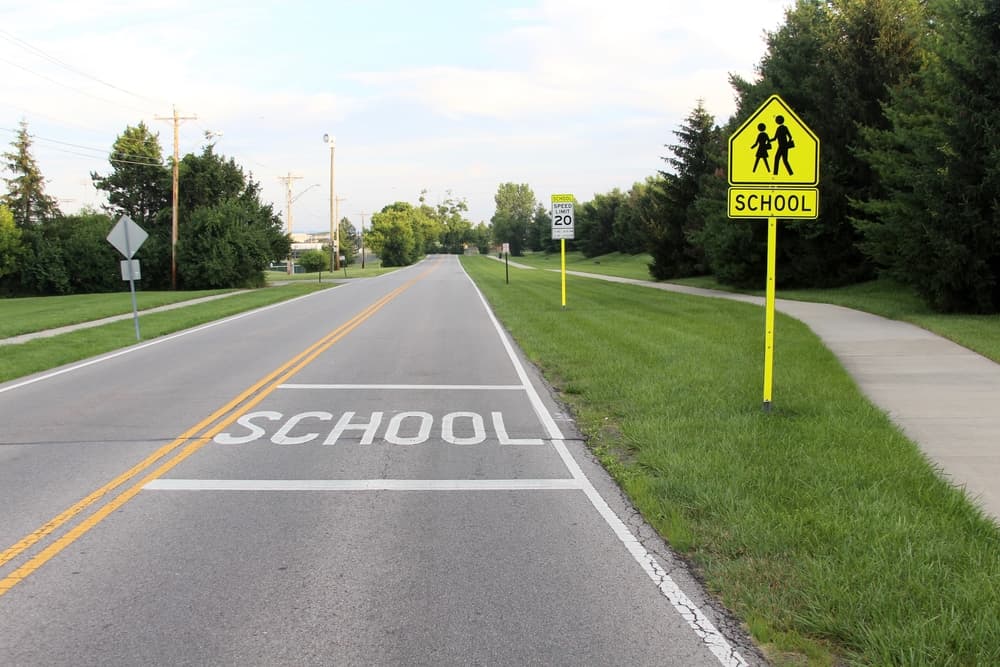
What Are the Most Important Back-to-School Safety Tips for Drivers?
The most important tips are to slow down, remove distractions, and expect the unexpected around children. Young walkers do not always follow the rules, so the responsibility to drive with care falls on every person behind the wheel.
Virginia sets lower speed limits in marked school zones under Virginia Code § 46.2-873, and those limits exist because even a small drop in speed gives a driver more time to react. Posted signs show the exact limit and the hours it applies.
During the school-year rush, keep these driving habits front and center:
- Slow to the posted school-zone limit and stay there until you are clear of the zone
- Never pass a stopped school bus that is loading or unloading children
- Scan sidewalks and curbs, not just the car in front of you
- Put the phone away so nothing pulls your eyes off the road
- Yield fully at crosswalks and wait for walkers to reach the other side
- Take extra care in rain, fog, or low morning light
None of these steps costs a driver more than a few seconds, and together they keep the children in our community safe on their way to class.
How Speeding and Distraction Put Young Walkers at Risk
Speeding and distracted driving are two of the biggest threats to children on foot, because both steal the split second a driver needs to stop. A car moving even a little faster travels much farther before it comes to a halt.
In our experience helping injured pedestrians, a driver's eyes leaving the road for a moment is often all it takes near a school. A text, a dashboard screen, or a reach for coffee can hide a child stepping off the curb.
The habits that most often lead to a pedestrian crash include:
- Rolling through a school zone above the posted limit
- Checking a phone at a stoplight, then pulling away distracted
- Turning at an intersection without looking for walkers in the crosswalk
- Backing out of a driveway or pickup spot without a full check behind
Trading these habits for a slower, focused approach is the surest way to keep our youngest walkers safe as they head to and from school.
How Drivers Should Share the Road With School Buses
Drivers must stop when a school bus flashes its red lights and extends its stop arm, on both sides of the road in most cases. Passing a stopped bus is dangerous and against the law under Virginia Code § 46.2-859.
The riskiest moments happen as children cross in front of the bus to reach their stop, often out of a driver's clear line of sight. Federal safety guidance from NHTSA reminds drivers that the area around a bus is where young riders are most exposed.
When you approach a school bus, give it plenty of room and wait until the red lights stop flashing and the bus begins to move before you go. A few patient seconds protect a child who may dart out where you cannot see.
Keeping Kids Safe on the Walk to School
Parents and kids stay safest when they plan a route with crosswalks, stay visible, and practice safe habits before the first day of school. A little preparation builds confidence for young walkers and eases the worry for parents.
Walking the route together a few times helps a child learn where to cross and what to watch for. It also gives parents a chance to point out the spots where they need to be extra careful, like a blind corner or a busy intersection.
For families near landmarks like Byrd Park or the neighborhoods around the Fan, a route that favors quiet streets and marked crossings is often safer than the most direct path. A few extra minutes on foot can mean a calmer, safer walk.
A handful of habits make a real difference for young pedestrians:
- Cross only at corners and marked crosswalks, never mid-block
- Stop at the curb, look left, right, and left again before stepping out
- Make eye contact with drivers before crossing in front of a car
- Wear bright colors or add a reflective tag to a backpack
- Keep phones and earbuds put away while walking near traffic
- Have younger children walk with an adult or an older sibling
You can find more child pedestrian guidance from NHTSA, and a short family conversation about these habits goes a long way toward a safe school year.

When a Pedestrian Crash Happens, How We Help
If a driver hurts your child or a loved one on the way to school, we are here to listen and help you understand your options. Our team steps in so your family can focus on recovery instead of paperwork and phone calls.
For a family, a case like this is never about money. It is about justice and making sure your child has the medical care, therapy, and support they need to heal and move forward.
We know how frightening it is to watch your child recover from a serious injury while bills and questions pile up. Our role is to lift that weight, so you can spend your energy at your child's side rather than on the phone with an adjuster.
Our Richmond pedestrian accident lawyer team investigates what happened, works with the insurance companies, and pursues the compensation your family deserves. When a crash traces back to a hazard like a poorly maintained walkway or a dangerous property condition, our Richmond premises liability attorneys can step in as well.
Backed by the wider Richmond personal injury team at Emroch & Kilduff, we bring 50-plus years in Richmond and a simple promise to every family we serve: we represent injured people only, never the driver, the insurer, or the company on the other side.
FAQs for Back-to-School Safety Tips for Drivers
Parents and drivers often ask us the same questions as the school year gets going, so here are straightforward answers to a few of them.
What is the speed limit in a Richmond school zone?
Speed limits in school zones are lower than the surrounding roads and are enforced during posted times, often 25 mph or less when children are present. Virginia sets the framework for reduced school-zone speeds, and local signs tell you the exact limit and the hours it applies.
When do I have to stop for a school bus?
You must stop when a school bus shows flashing red lights and an extended stop sign, whether you are behind it or approaching from the other direction on most roads. Wait until the lights stop flashing and the bus starts moving again before you drive on.
Are drivers always at fault when a pedestrian is hit?
Not automatically. Fault depends on the specific facts of each crash, and both drivers and pedestrians carry responsibilities on the road, which is why a careful review of what happened matters so much.
What should parents teach young children about crossing streets?
Teach children to stop at the curb, look both ways, use crosswalks, and make eye contact with drivers before stepping out. Practicing the route together helps these habits become second nature.
How can drivers cut down on distractions near schools?
Put the phone away, set your directions before you start driving, and keep your full attention on the road during school hours. Even a two-second glance away can hide a child stepping off the curb.
When should drivers be most alert for children walking?
Drivers should be most alert during the morning arrival and afternoon dismissal windows, when the most children are on the move near schools. Easing your speed and scanning the sidewalks during those hours makes a real difference.
Why do darker mornings make school-zone driving harder?
As fall arrives, children often head to school before full daylight, and low light makes a small pedestrian harder to see. Slowing down and using your headlights gives you more time to spot a walker near the road.
Help Keep Richmond Students Safe This School Year

Every driver, parent, and young walker has a part to play in a safe back-to-school season, and small choices behind the wheel save lives. If a careless driver has injured your child or someone you love, you do not have to face what comes next alone.
For 50-plus years in Richmond, Emroch & Kilduff has stood with injured pedestrians and their families. Call (804) 358-1568 or reach us online for a free, confidential consultation, available 24/7, and let us handle the legal work while you care for your family.